Adaptive Noise Cancellation
Real-time AI noise cancellation for defence radio. Gunfire, engines and rotor wash are stripped from the channel on a Raspberry Pi 5, so an order is heard the first time.
Watch it work
Press play for soundRecorded on the prototype: a noisy channel going in, the cleaned speech coming out.
Rather listen? The same recording, audio only.
Noisy input
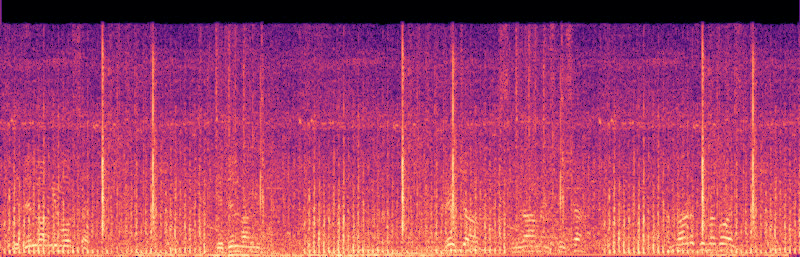
Enhanced output
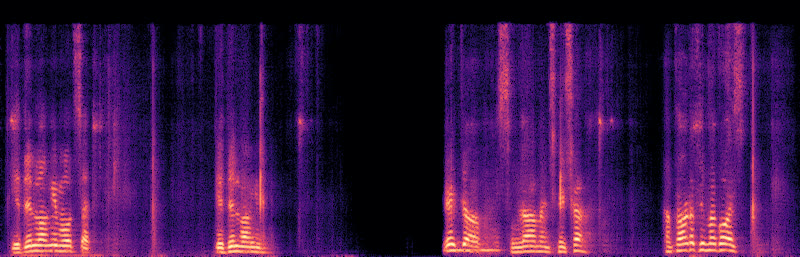
In each spectrogram, brightness is loudness at each pitch over time, low pitches at the bottom. Both use one shared scale, so darker really means quieter. Noise fills the whole Noisy input picture; after the model, what is left is the voice (the stacked horizontal lines are its harmonics), with the pauses gone dark. The black strip along the top edge of both is the phone's audio compression, not the model.
Hear the difference
Held-out test clipNoisy radio channel
Enhanced by our model
Three held-out test recordings joined end to end, so the noise switches from a helicopter louder than the speech itself, to an engine, to rifle fire. None of it was used in training. On this clip PESQ rises from 1.19 to 2.06, one of the best of our eight demo clips; across all eight the gain runs from +0.39 to +0.87.
How it works
Swipe through each flowHow the model is trained, and how that same trained model runs live on a Raspberry Pi. Every picture is a real spectrogram from this project: time runs left to right, pitch bottom to top, brighter is louder.
Swipe, or use the arrow keys
Training example: an English training clip with an assault-rifle clip mixed in at 5 dB, run through the shipped model (run 0036). On the Pi: the recording from the demo video.
Where the numbers stand
125 held-out mixturesPrototype figures, not final ones. The ceiling above them is already measured at PESQ 3.389. Ahead of DeepFilterNet v0.5.6 on the same held-out set, on all three metrics.
From the bench
2 items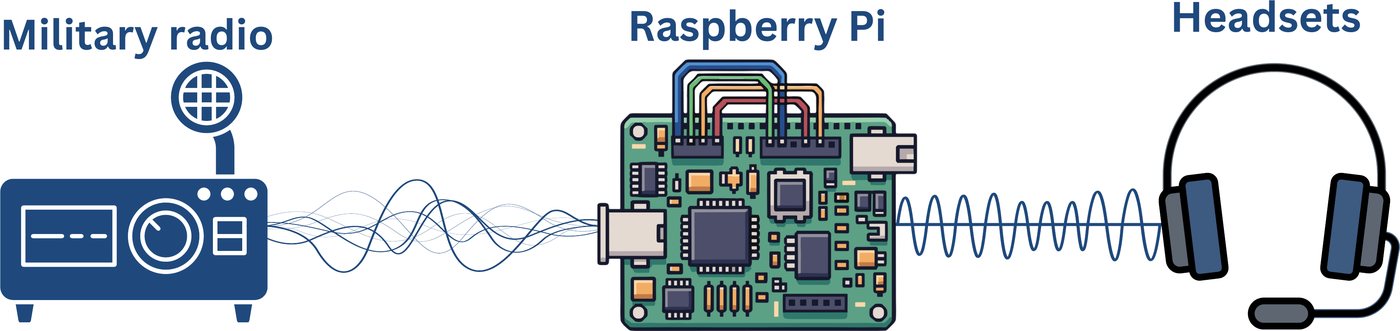
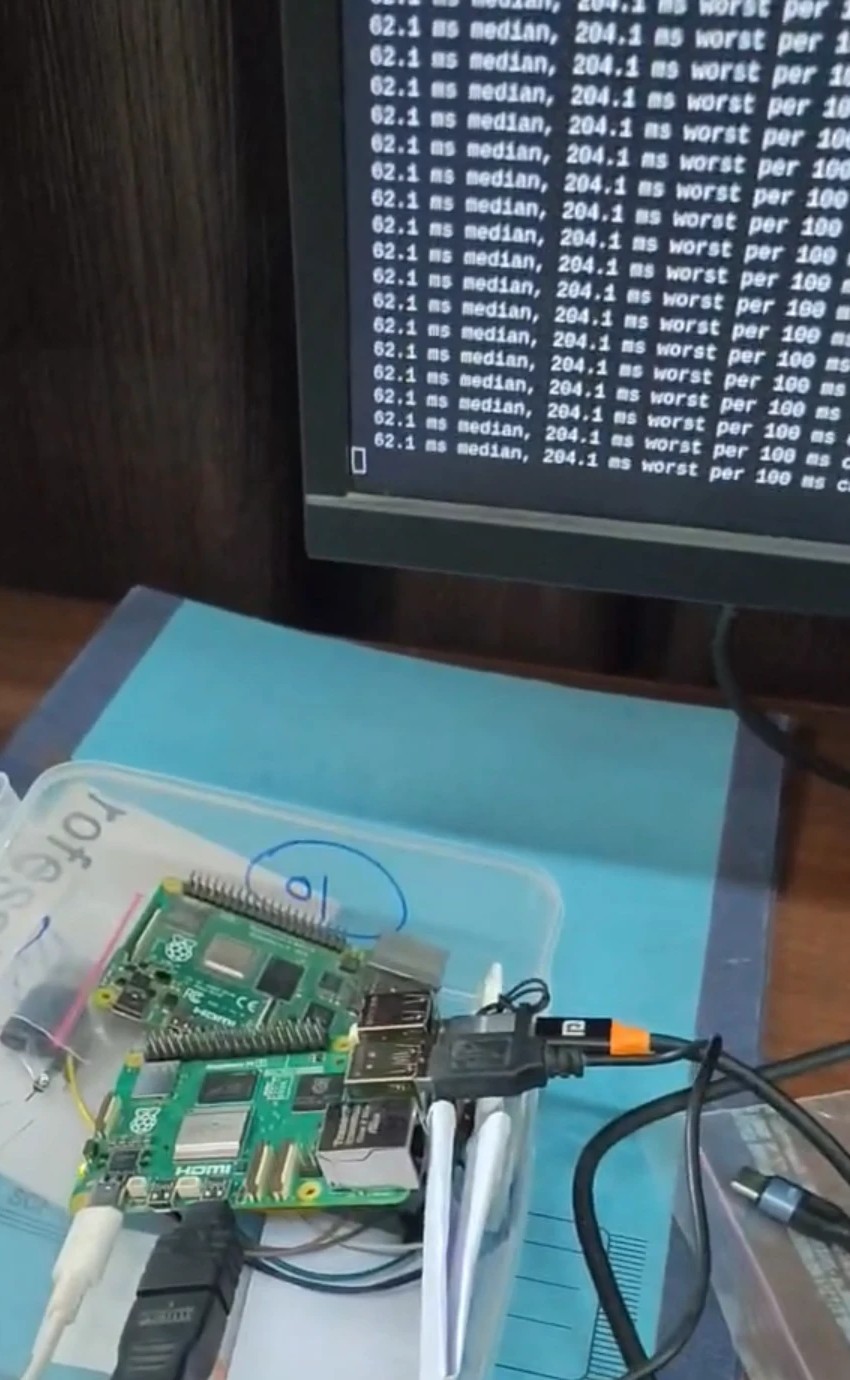
Progress notes
Newest first- Result
Ahead of DeepFilterNet v0.5.6 on our own 125-clip held-out set, on PESQ, STOI and SI-SNR at once.
- Hardware
The two-stage model runs on a Raspberry Pi 5 at 69.7 ms per 100 ms chunk, int8, no GPU.
- Training
36 logged training runs. Two changes moved quality: a perceptual loss, and an additive second stage that restores what a mask removes.
- Next
DCCRN, toward the PESQ 3.389 ceiling our ideal-mask test measured.
Source code
The model, training and evaluation code, every training run's record, and the Raspberry Pi deployment kit. Audio datasets are not included.
github.com/lochan28/Audiophiles_Repo ↗